Berlin, Germany
4th FUNDING CALL
Objectives
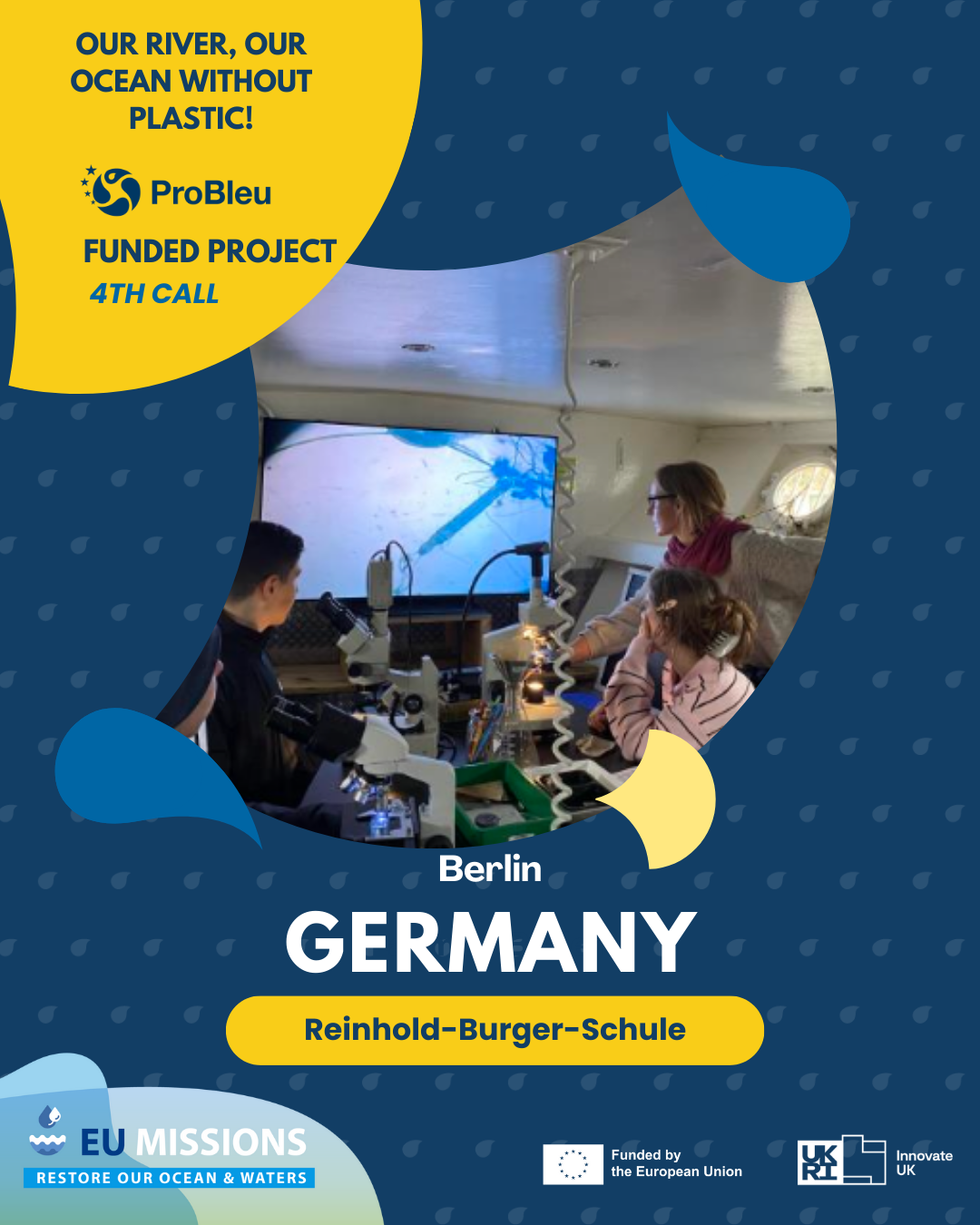
A school in Berlin, Germany, has launched a new initiative titled “Our River Our Ocean without Plastic!”. This six-month project, running from October 2025 to March 2026, aims to involve 220 students from grades 8 and 10 in a comprehensive, interdisciplinary study of ocean pollution. The project’s core mission is to trace the journey of plastic waste from the local Panke River in Berlin to the North Sea, a path that includes the Spree, Havel, and Elbe rivers.
The project has several key objectives.
- Students will gain a deep understanding of plastic pollution through integrated lessons in Chemistry, Physics, Social Sciences, and Geography.
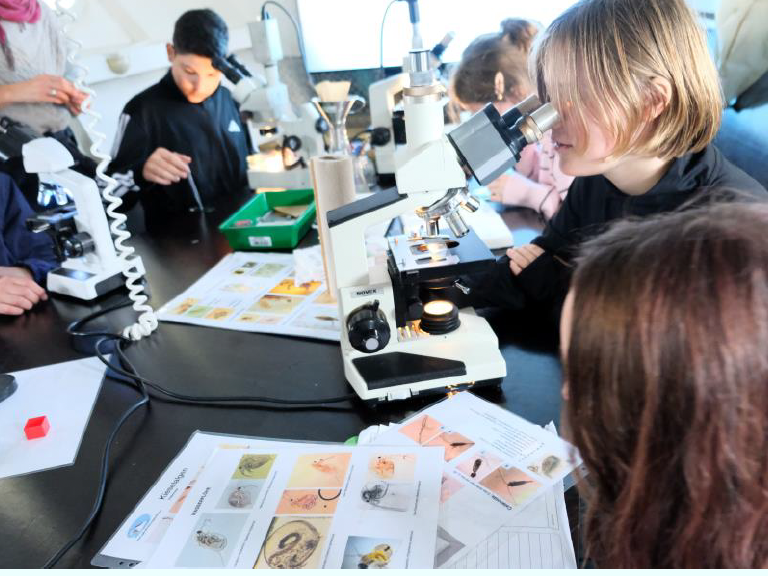
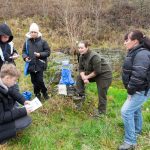
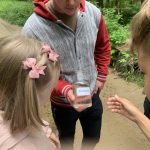
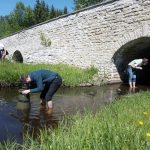
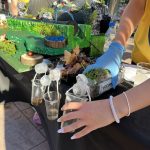
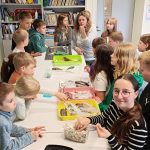
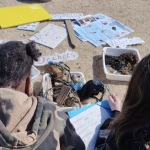
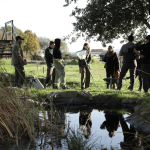
- Hands-on citizen science activities, including water sampling and plastic residue detection, will be central to the learning experience.
- The project also aims to foster students’ creative confidence in raising awareness about this issue and encourage them to document and reduce their personal plastic consumption.
- It seeks to develop future-oriented thinking, competence to act, and intergenerational dialogue.
- Teachers will acquire new tools and methods through collaboration with scientists and an artist.
- A key goal is for the students to meet their peers from a partnering school on the North Sea coast and support that school in its application to become a European Blue School.
Activities & Collaborations
The project’s activities are structured with a clear timeline, focusing on both in-class learning and fieldwork.
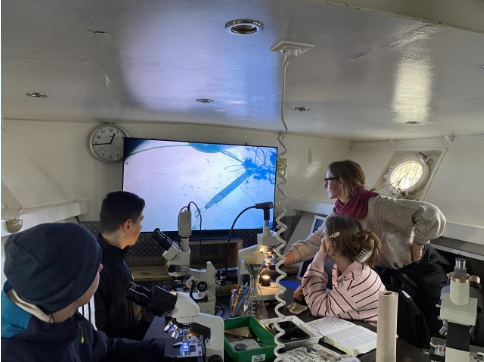
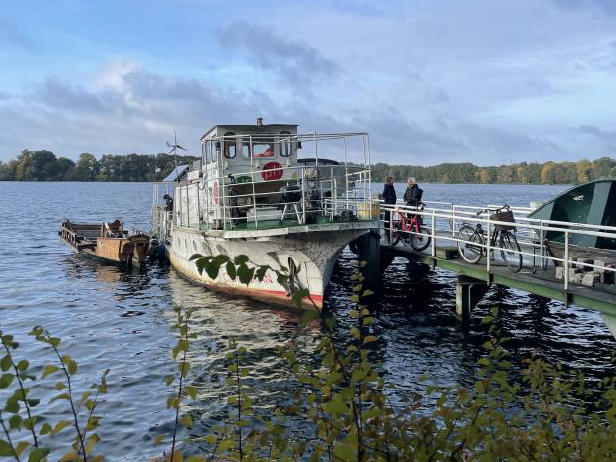
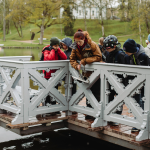
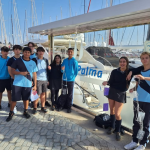
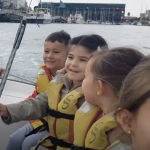
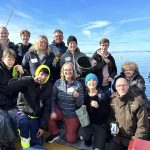
- October: Grade 10 students will have chemistry and social sciences lessons on plastics and their connection to UN Sustainable Development Goals. Both grades will take a research trip to the Youth Research Ship Berlin.
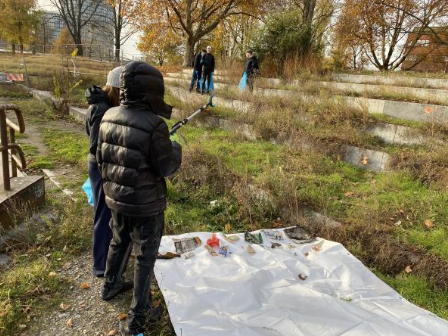
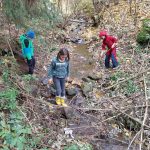
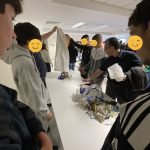
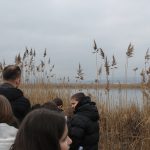
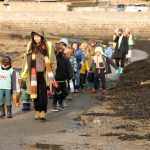
- November: Grade 8 and 10 students will have social science lessons on the topography of Europe and in particular on the rivers flow from the Panke to the North Sea. Grade 8 and 10 students will use the “Plastic Pirates Go Europe” citizen science methodology to investigate plastic pollution in the Panke River, with an artist from the Institute for Art and Innovation Berlin (IFAI) assisting with visual recording for a planned art installation.
- December: Grade 8 and 10 students will present their results to Dr. Christian Marx, who has researched the River Panke while working at the Technical University of Berlin and the Leibniz Institute of Freshwater Ecology and Inland Fisheries (IGB).
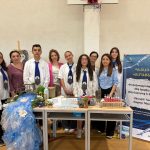
- January: Grades 8 and 10 will present their initial findings to the public at the school’s Open Day. Grade 8 students will then conduct a citizen science investigation on the Spree River, presenting their results to a representative of ALLES IM FLUSS from wirBERLIN gGmbH.
- February: Social Sciences lessons will focus on solutions to plastic pollution. Students will keep “rubbish diaries” and meet with Clubtopia, a company for plastic-free festivals. All Grade 10 students will investigate pollution in the Havel River and present their results to the Environmental Education Expert of Haus der Flüsse Havelberg, Derk Schneider.
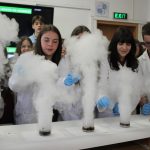
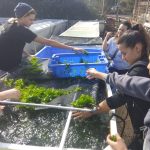
- March: Grade 10 students will conduct a final investigation on the Elbe River with students from the partnering Eider Treene School. Together, they will also visit the Multimar Wattforum and take part in a Marine litter Workshop. Chemistry lessons will include an experiment to produce disposable packaging from brown algae, with the results being included in the art installation.
The project relies on collaborations with experts and organizations such as the Kieler Forschungswerkstatt, Ecologic Institute, Institute, Haus der Flüsse,
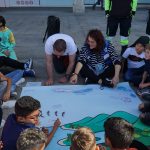
and Multimar Wattforum. An artist will guide students in creating the “Eternal Shelf Life” art installation using collected plastic waste and DIY algae packaging.
Expected Outputs & Impact
The project will produce several tangible outputs.
- Data and plastic collections from citizen science activities, visual recordings, and images of the art installation.
- The “Eternal Shelf Life” installation will serve as a long-term observation tool for comparing the decomposition of plastic and algae-based products.
- Self-made algae drinking capsules will be showcased at a school festival.
- The project’s activities and outputs will be embedded in existing curricula, with new topics introduced in subjects like Physics, Chemistry, and Social Sciences.
- The project will engage the wider community through public presentations and intergenerational dialogue with students’ families.
The school plans to share its experiences and teaching aids on the European School Education Platform, contributing to the ProBleu Catalogue and a national brochure for teaching material.
























 Funded by the European Union